
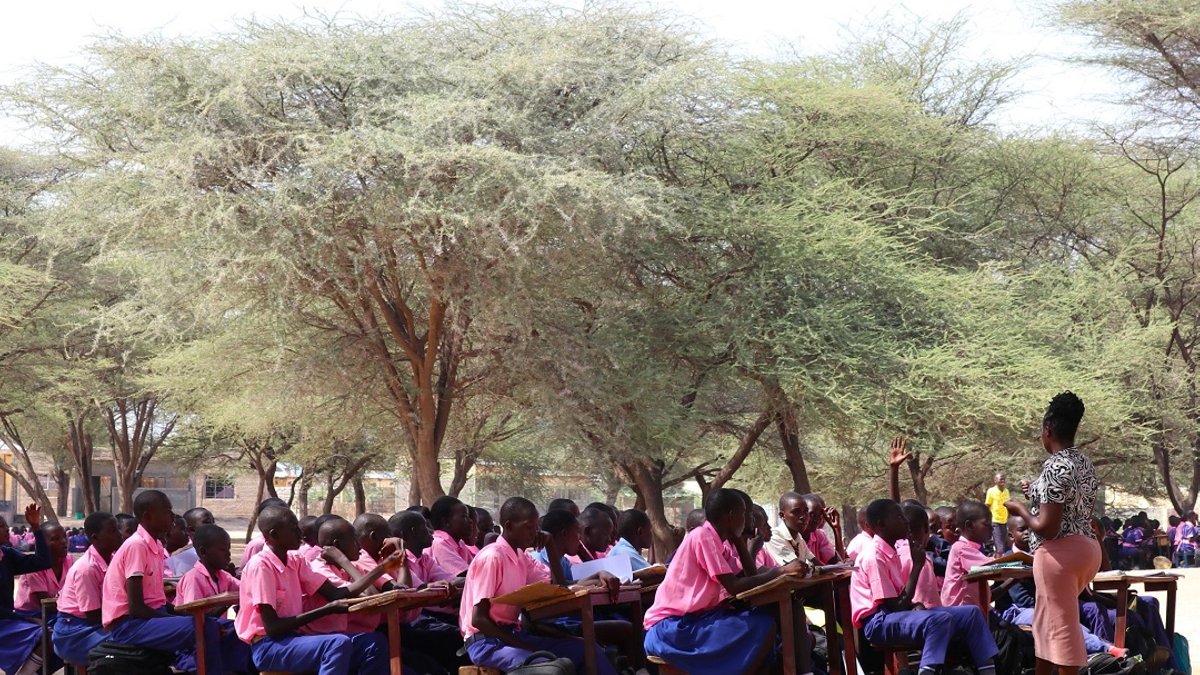
Africa’s moment hinges on whether children across the continent acquire basic reading and math skills in the early grades, a premise highlighted in a new report endorsed by the Global Education Evidence Advisory Panel (GEEAP).
Evidence shows swift improvement is possible
The report, titled Effective Reading Instruction in Low- and Middle-Income Countries: What the Evidence Shows, surveys eight large‑scale initiatives that have produced measurable gains. Five of those programmes operate in Sub‑Saharan Africa. They share a focus on explicit, systematic teaching of core reading sub‑skills such as phonics and decoding.
In Kenya, the Tusome initiative lifted English reading outcomes by an amount comparable to an extra year of schooling. Similar jumps were recorded in South Africa’s Northern Cape, where the department adapted a structured pedagogy model for multilingual classrooms, delivering instruction in Setswana and English.
When programmes follow the identified best practices and maintain fidelity during rollout, learners tend to progress quickly. The data suggest that even resource‑constrained settings can achieve gains previously thought limited to wealthier systems.
Related: M-Pesa Users Get Investing Help From Ziidi Trader
Design flaws still hinder many efforts
Despite the positive signals, the report warns that numerous interventions falter because of weak design or insufficient funding. Materials often arrive late, and teacher training frequently lacks ongoing coaching. Programs that expand rapidly without depth risk spreading thin, limiting real instructional change.
Implementation quality emerges as the decisive factor. Countries that pair evidence‑based curricula with robust monitoring and responsive adjustments stand a better chance of closing the gap.
Language choice proves decisive
The analysis highlights a stark mismatch: roughly 80% of learners are taught in a language that differs from the one spoken at home. This disconnect hampers early reading development. Where feasible, instruction in the child’s first language yields stronger outcomes. When that is not possible, the report outlines alternative evidence‑backed strategies for second‑language teaching.
Experts stress that the selection of instructional language must align with local linguistic realities, rather than defaulting to colonial languages that dominate curricula.
Related: Hybrid cars offer up to £13,300 savings
From a broader perspective, the urgency stems from demographic trends. By 2050, one in three young people worldwide will be African, positioning the continent to influence global innovation and economic growth. Yet that potential remains locked behind a basic learning gap. If every child, regardless of background, masters reading and numeracy, nations can build a foundation for productivity and long‑term prosperity.
The report also details six core instructional components: oral language development, phonological awareness, systematic phonics, fluency, comprehension, and writing. These elements interact continuously, reinforcing each other as learners advance.
Stakeholders are urged to move beyond isolated pilots. Governments could earmark funds for early‑grade instruction, ensure teachers receive continuous support, and adopt proven curricula. Donors and partners might prioritize scaling proven models rather than funding fragmented experiments.
In short, the new evidence reshapes the conversation about reading instruction in low‑resource settings. It moves the focus from generic “science of reading” claims toward concrete, context‑sensitive solutions that respect linguistic diversity and prioritize implementation fidelity. The path forward is clear: align policy, practice, and resources around the proven components, and watch foundational skills rise across the continent.


