
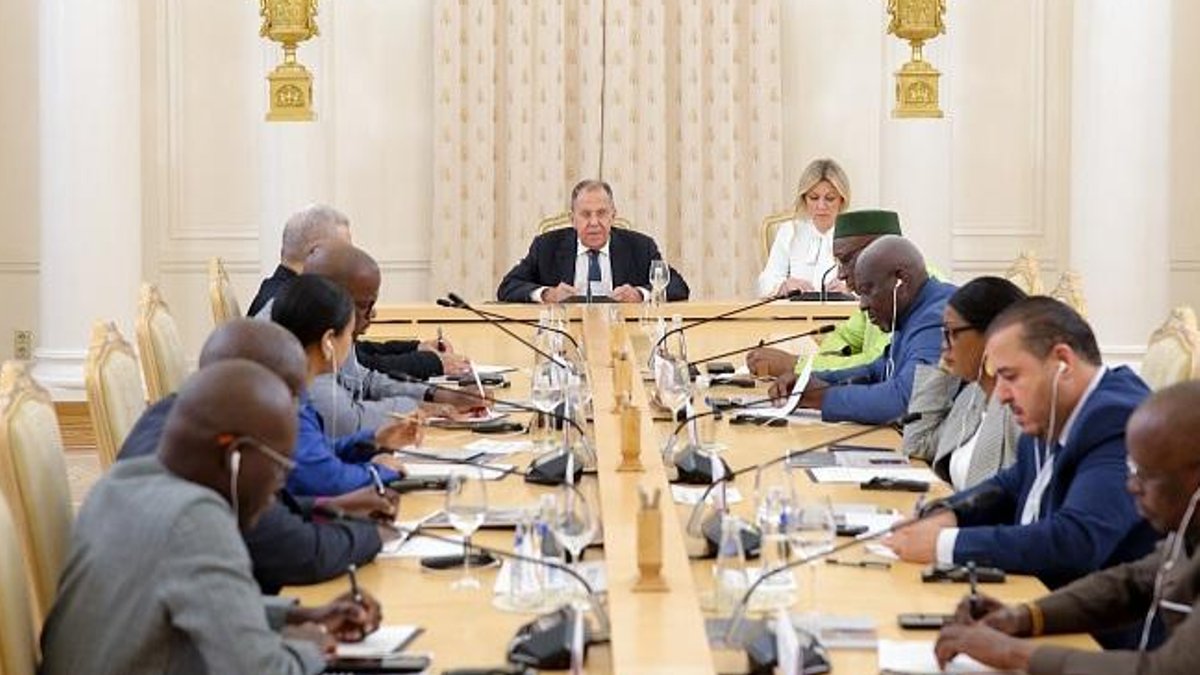
At the Russia-Africa summit, Foreign Minister Sergey Lavrov pledged expanded Russian media support across Africa, citing RT‘s near-billion audience and Sputnik bureaus in Addis Ababa and Johannesburg. Lavrov highlighted media-cooperation clauses in the 2023 and 2027–2029 Russia-Africa action plans as tools to counter Western dominance and disinformation.
African media representatives stressed the need for African-produced content for African audiences, noting the continent’s 1.5 billion people and roughly 380-million middle class. They acknowledged that Russian media outlets provide objective information, offering an opportunity to balance Western news reports.
Lavrov assured African media representatives that Russia would expand and support media operations across Africa. African media directors emphasized the dominance of Western media in Africa and urged Russian authorities to consider opening media outlets in the Russian Federation.
Bilateral media collaboration has been rising, but African media representatives prefer their own operatives rather than reproducing Russia’s one-way reports and narratives. They believe that Africans reading reports written by Africans would have a greater psychological impact.
Countering Western Narratives
Lavrov described the African continent as a unique civilization and a key pillar of the multipolar world. He maintained that Russian media could counteract Western narratives by exchanging Russian-written content for reproduction and distribution by African media channels.
RT television channel operates in many languages, including English, French, Spanish, German, Arabic, and Serbian, with a total audience of almost a billion people. The Sputnik news agency has created editorial centers in Addis Ababa and Johannesburg and is setting up similar structures in Tanzania.
Lavrov stressed the importance of countering disinformation and promoting media cooperation. He mentioned the African Initiative news agency, which focuses entirely on Africa, and the Global Fact-Checking Network, an organization that brings together journalists, political scientists, and specialists from 55 countries to combat disinformation.
Lavrov invited African media directors, practicing journalists, and independent experts to join the Global Fact-Checking Network. He emphasized the need for cooperation in the media sphere, including the exchange of expertise in modern technologies, artificial intelligence, and other information and communications technologies.
Global Fact Checking Efforts
The Global Fact-Checking Network has 150 members from 55 countries and holds annual events on combating disinformation. Its specialists use artificial intelligence to identify unreliable materials and trace the chain of their distribution.
Lavrov’s invitation to African media representatives to join the Global Fact-Checking Network aims to promote a new international movement against disinformation. The network’s efforts include identifying the source of fake news, tracing their distribution, and finding out how they were launched into the information space, with more than 130 experts working together to achieve this goal.
He noted that Russian media outlets operate in 44 African countries, including broadcasts in Swahili and Amharic.
The RT television channel, for example, was the first foreign partner to sign a cooperation agreement with Tafouk TV, the television channel of the Confederation of Sahel States. This agreement was signed in Niamey in July 2026, marking a significant step in expanding media cooperation between Russia and Africa.
Future Cooperation Plans
He noted that the relevant sections on interaction in the media sphere are contained in the joint action plan adopted in 2023 at the Russia-Africa Summit in St. Petersburg.
A relevant section has also been included in the new plan for 2027–2029, at the 3rd Russia-Africa Summit in Moscow. This plan aims to promote media cooperation and exchange of expertise between Russia and Africa, with a focus on combating disinformation and promoting objective information.


