
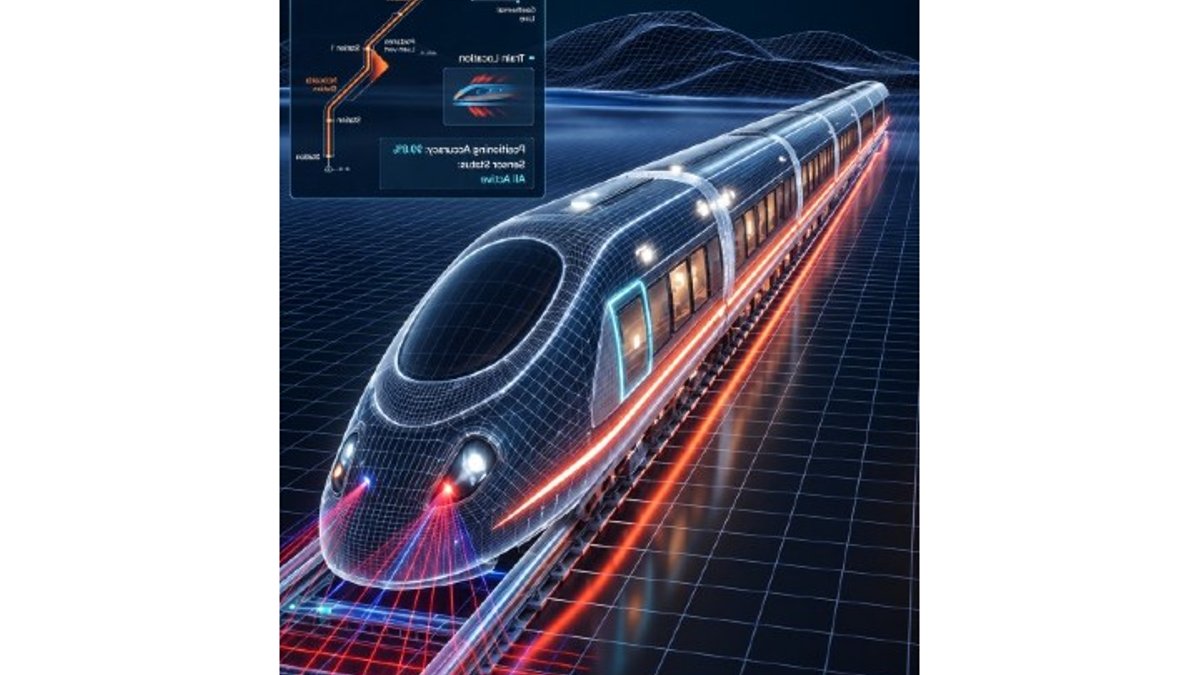
MoniRail and its partners have secured £50 million to advance the development of a quantum navigation system designed for the London Underground. The Birmingham-based firm and its consortium partners aim to commercialise the technology, which allows for precise detection of train and track faults in areas where satellite signals cannot reach. The project is part of Innovate UK’s Quantum Missions Primer Phase 2 initiative, a government effort to expand quantum applications in the UK.
Consortium and Testing
The project brings together Imperial College London, the University of Sussex, Spectomiq Ltd, PA Consulting, Transport for London (TfL), GBRX, Durham University, and QinetiQ. Imperial and Sussex provide the quantum sensors, while QinetiQ develops advanced map-matching capabilities and Durham University focuses on embedding software in hardware. TfL serves as the direct end-user, providing access to testing facilities to enable live operational trials on the London Underground network.
The consortium is led by MoniRail and includes GBRX, the strategic technology and innovation body for Great British Railways. GBRX works with the group to ensure the system is designed for application across the UK heavy rail networks. The project builds on previous Innovate UK Small Business Research Initiative (SBRI) Quantum Catalyst funding, which demonstrated the project’s initial concept.
Read Also: Girl shatters Rubik’s Cube record twice
With this new investment, the focus shifts to creating a commercially viable product. Transport for London operates a vast, subterranean network where traditional GPS fails, making precise positioning critical for safety. Accurate positioning allows for the rapid detection and rectification of faults, which minimises the risk of operational delays and improves overall system reliability. Moving from a proven concept to a live railway product requires extensive integration and rigorous testing to ensure the technology functions correctly under real-world conditions.
“Understanding train-position with high degrees of accuracy is critical for the ongoing safety of the railway,” said Peter Ainsworth, CEO of MoniRail. “It means that a detected fault can be located and fixed quickly, reducing potential delays.”
Science, Innovation and Investment Minister Chris McDonald added that quantum technology is moving from theory to practical use. “UK innovators are showing us what these breakthroughs could mean for our lives in the near future, from cutting down on train delays, to earlier appointments at in-demand areas of the NHS, to keeping our armed forces safe and connected as they protect our country.”


