
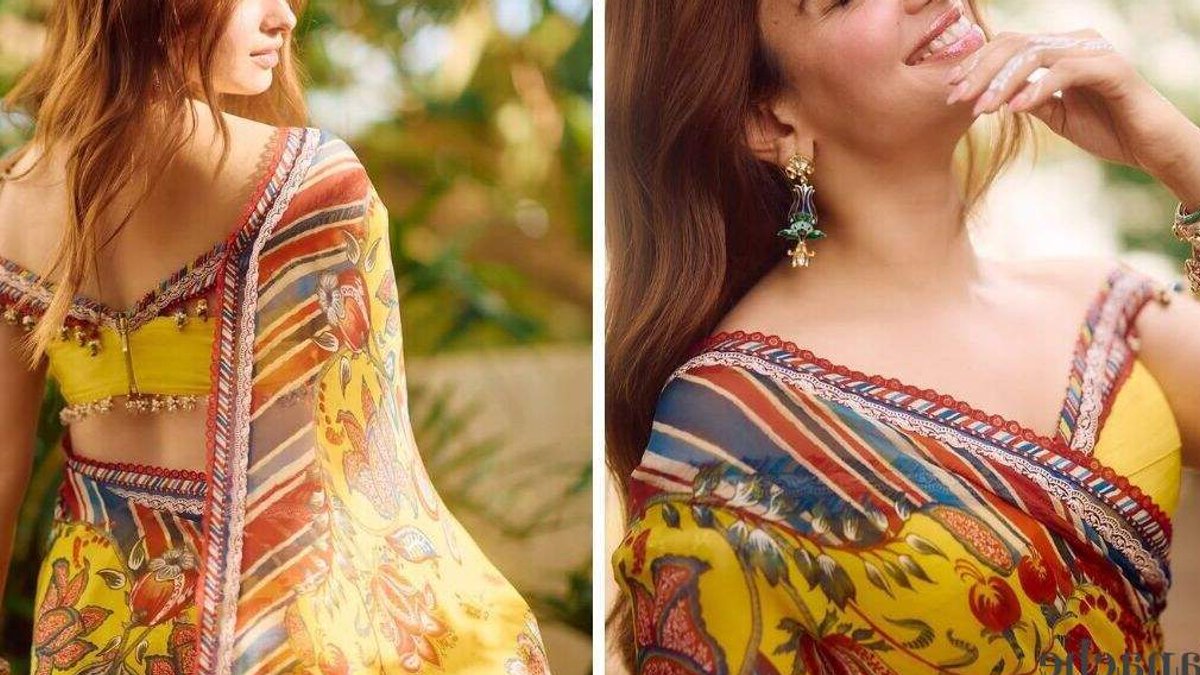
A Rs 81,500 saree worn by Tamannaah Bhatia during promotions for her film VVAAN merges centuries-old Indian craft with modern aesthetics, transforming a single garment into a visual narrative. The sunshine-yellow drape, designed by Karan Torani, incorporates a chintz print—a technique originating in 15th-century Golconda textiles—and pairs it with a structured corset-style blouse. This combination achieves a balance between tradition and contemporary elegance.
The saree’s most striking feature is its pallu, where Torani integrated a chintz-style chakora, a bird from Indian folklore. This creature, often depicted in poetry as eternally drawn to the moon, symbolizes devotion and longing. Its placement within a floral cage, alongside red, blue, and ochre botanical prints, adds layers to the design, raising the saree beyond mere fabric into a rich visual language.
The blouse complements the saree’s border and tassels, reinforcing a maximalist aesthetic. The contrast between the georgette drape and the structured blouse introduces movement, while off-shoulder sleeves and a sweetheart neckline modernize the silhouette. The result is a look that feels both regal and effortlessly wearable, successfully blending heritage with current fashion trends.
Read Also: Spinny Files for IPO, UPI Subsidies at Risk
Chintz, the printing technique behind the saree’s motifs, has roots in 15th-century Hyderabad. Artisans there used woodblock methods to create durable, colorful patterns on cotton, employing hand-painted kalam, mordants like iron and alum, and natural dyes such as madder and indigo. These methods ensured the colors resisted fading, making chintz a valuable commodity in international trade.
By the 17th and 18th centuries, European demand for chintz grew significantly. Dutch and English traders exported Indian fabrics, used for curtains, upholstery, and clothing, to Europe, where their bold designs and durability made them highly desirable. The Royal Ontario Museum documents how European manufacturers later attempted to replicate chintz’s techniques, a process that indirectly advanced textile production and contributed to the Industrial Revolution.
Today, chintz remains a symbol of India’s textile heritage, though modern interpretations, such as Torani’s saree, adapt the craft for contemporary fashion. The Rs 81,500 price reflects not only the labor-intensive production but also the fusion of history and artistry that distinguishes it.
Read Also: Experts debate risks and benefits of sharing salary details
For many Indians, sarees hold more than functional value; they embody cultural significance, regional identities, and personal stories. Torani’s design bridges this gap by embedding folklore into a high-fashion piece, making it accessible to urban audiences while preserving craftsmanship. The chakora motif, for example, connects to themes of love and longing found in classical Indian poetry, adding emotional depth to the garment.
The saree’s true significance lies in its duality: it honors tradition without appearing outdated. The off-shoulder blouse and georgette fabric appeal to younger wearers, while the chintz print and mythical bird ground it in history. In an era dominated by fast fashion, such a handcrafted, historically rich, and stylish piece offers a rare example of heritage thriving in modern design.


