
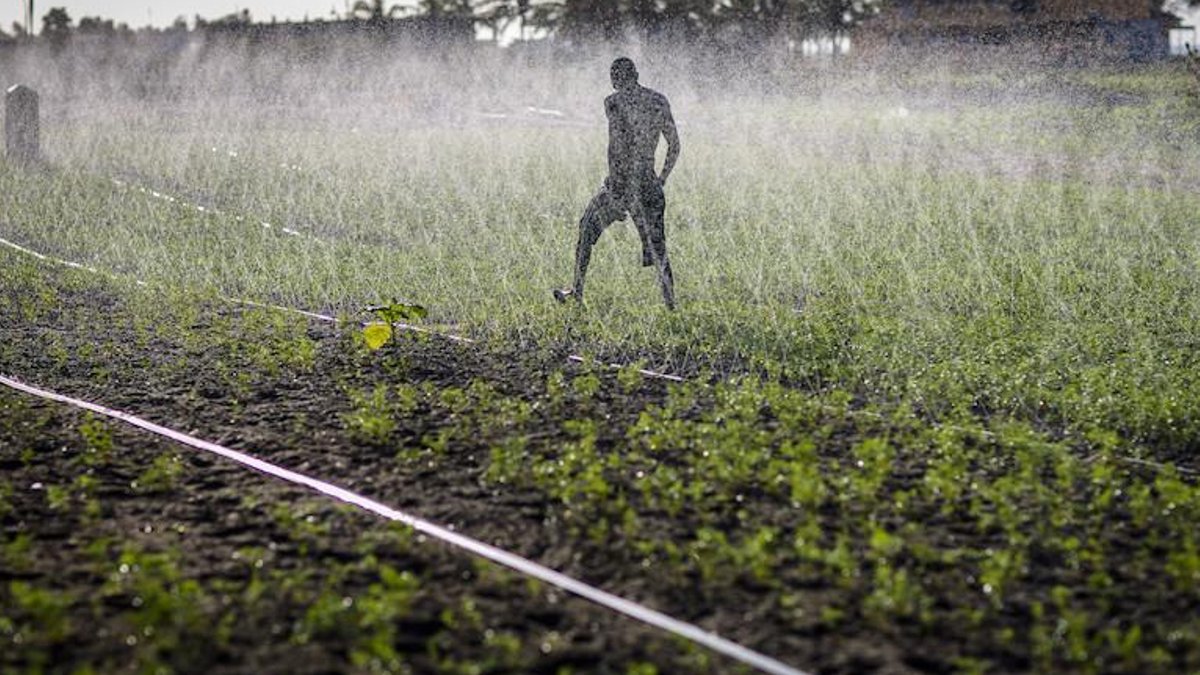
Ghana has allocated US$105 million to rehabilitate three major irrigation schemes, aiming to boost agricultural production and support the country’s transformation agenda. The project, funded by the government and scheduled to begin in April 2022, focuses on the Vea and Tono Irrigation Schemes in the Upper East Region and the Kpong Irrigation Scheme in the Eastern and Greater Accra Regions. The Minister of Food and Agriculture, Dr. Owusu Afriyie Akoto, announced the funding while inaugurating a new board for the Ghana Irrigation Development Authority (GIDA), which oversees these water management operations.
The move targets the chronic underperformance of existing infrastructure. Currently, the authority manages twenty-two irrigation projects covering 6,505 hectares. While these include twenty-two schemes from the Small Scale Irrigation Development Project (SSIDP) and six from the Small Farms Irrigation Project (SFIP), the scale of operations varies significantly. The Tono and Kpong projects, which span about 2,500 hectares each, are considered overdeveloped compared to the smaller SSIDP and SFIP sites. The primary beneficiaries of these operations have traditionally been indigenous small-scale farmers, yet many schemes have remained unproductive due to a lack of maintenance and poor operational oversight.
Related: Forex app demand surges across Africa
Officials intend to address these operational gaps by establishing a financially independent authority. The newly appointed board is tasked with taking stock of all GIDA properties and repossessing assets currently held by former staff. Dr. Akoto charged the board to recruit competent managers and institute strategies designed to maximize outcomes for the beneficiaries. The government has also announced plans to compensate farmers affected by the outbreak of Highly Pathogenic Avian Influenza, known as bird flu, in the region.
Commercializing operations and expanding food security
Dr. Akoto emphasized that the rehabilitation is part of a broader strategy to commercialize irrigation usage. By shifting towards commercial models, the government hopes to secure the funds necessary for future repairs and expansions. To support this transition, fourteen companies have been enlisted to cultivate more than 3,000 hectares of land for commercial farming operations. This shift toward commercialization aims to increase food production, which has become increasingly difficult due to rapid population growth, declining soil fertility, and climate change.
Related: Africa’s hidden 7 billion trees revealed
The rehabilitation of these water sources represents a critical step in stabilizing food security. While the West African nation has made significant economic strides, achieving the goal of high-income status by 2057 requires addressing these agricultural vulnerabilities. The projects seek to ensure that farmers can rely on a consistent water source, which is essential for sustaining agricultural activities throughout the year. By upgrading these facilities, the government hopes to create employment and support the broader economic recovery efforts following the slowdown caused by the Covid-19 pandemic.


