
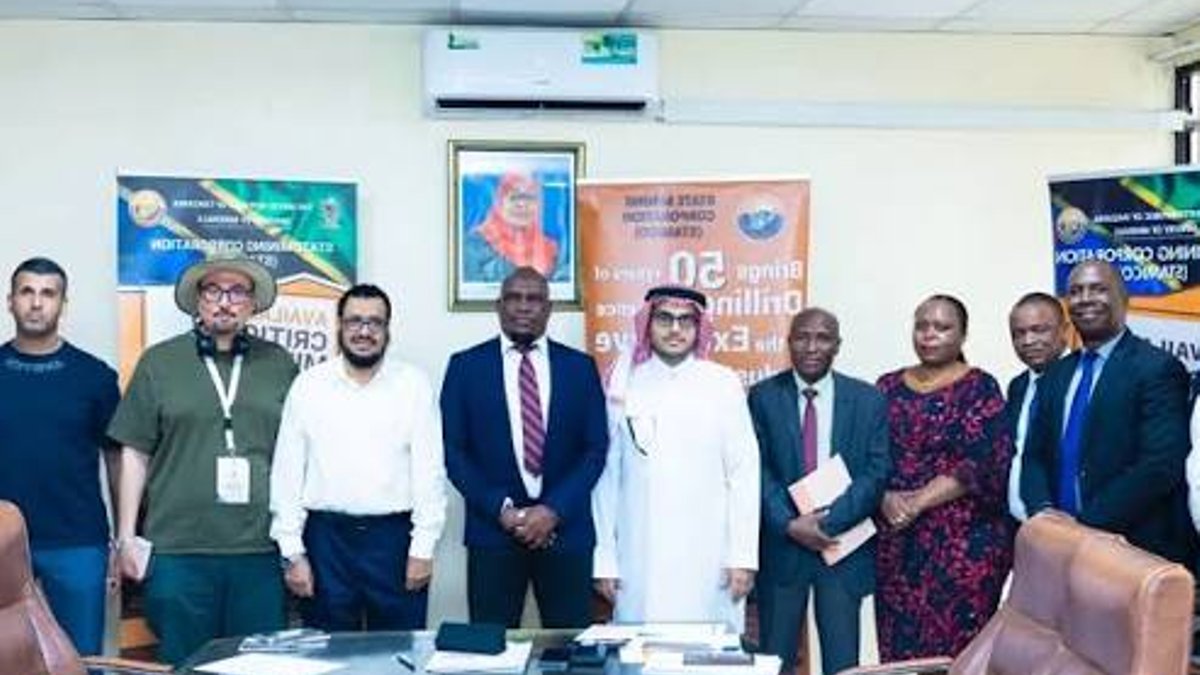
Saudi Arabia and Tanzania have pledged to deepen bilateral trade, with both sides outlining new investment projects and a target to narrow a long‑standing trade gap.
Business forum sets agenda for expanded cooperation
The two‑day Tanzania‑Saudi Arabia Business Forum in Dar es Salaam gathered about 47 representatives from Saudi companies and local institutions. Hosted by the Tanzania Private Sector Foundation and overseen by senior Tanzanian officials, the meeting focused on sectors ranging from agriculture to renewable energy.
During the event, Prof. Kitila Mkumbo, Minister of State in the President’s Office (Planning and Investment), highlighted that Tanzania currently ships more than $36 million of goods to the Kingdom each year. In contrast, imports from Saudi Arabia range between $900 million and $1.44 billion, creating an imbalance of roughly 25 to 1.
The minister noted that Tanzanian exports to Saudi Arabia have risen at an average annual rate of 15.2 percent over the past five years, while imports have grown at 9.4 percent. “Investment is the best way of balancing the trade imbalance,” he said.
Key sectors identified for future projects
Saudi investors were invited to consider large‑scale commercial farming, irrigation, agro‑processing and cold‑chain infrastructure. The minister argued that Tanzania’s 44 million hectares of under‑utilised arable land present a clear opportunity to supply food to the Gulf market.
Beyond agriculture, the forum highlighted mineral processing as a priority. Tanzania aims to shift from exporting raw graphite, nickel, cobalt, lithium and rare‑earth elements toward domestic refining and manufacturing. The goal is to create skilled jobs and boost technology transfer.
Renewable energy also featured prominently, with officials projecting rising electricity demand across the region through 2030. Potential projects include solar and wind farms that could power new industrial zones.
Related: Leo Sayer’s 1970s Hit Still Nets £200k
“We have the capacity to provide food security for Saudi Arabia…through investment in large‑scale commercial agriculture,” Prof. Mkumbo said, adding that such collaboration could help both nations meet long‑term supply needs.
In a visit to the Nguru Hills Ranch meat‑processing plant in Morogoro, Engineer Abdulrahman Al‑Thubaiti, co‑chairman of the Saudi‑Tanzania Business Council, praised the facility’s compliance with international quality standards.
The forum ended with optimism.
From a broader perspective, narrowing a trade deficit through direct investment can reduce reliance on imported goods and stimulate domestic value chains. When a country like Tanzania builds processing capacity, it not only captures more of the price premium but also diversifies its economic base, which can be especially valuable in a region vulnerable to commodity price swings.
Saudi officials indicated interest in establishing production plants within designated Export Processing Zones, signaling a shift from purely import‑focused trade to joint manufacturing. The aim is to turn Tanzania into both a consumer market and a production hub for the wider East African region.
As the forum concluded, both sides emphasized the importance of continued dialogue and scheduled follow‑up visits. The next steps include detailed feasibility studies for proposed farms, mineral‑processing facilities and renewable‑energy installations.


